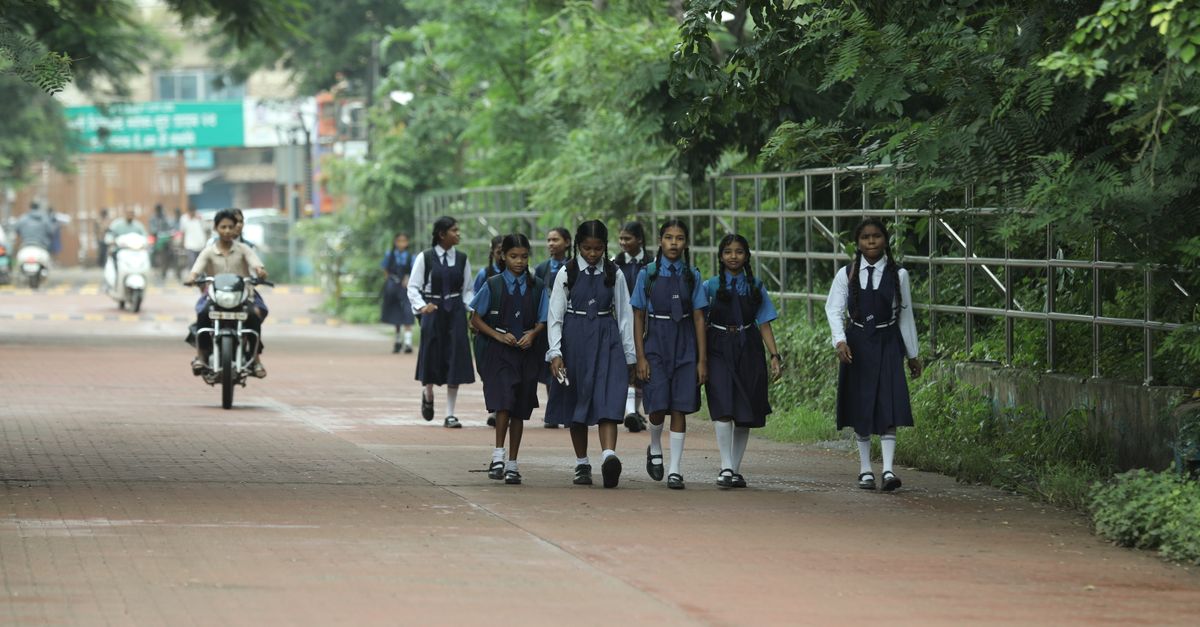
Namo Lakshmi Yojana provides vital financial support to girls studying in Class 9 through Class 12 across Gujarat. Many parents and students find themselves wondering when the monthly allowance will actually arrive after their school submits the application. Understanding the official disbursement cycle helps families plan school expenses without unnecessary anxiety.
Under the Namo Lakshmi Yojana Gujarat scheme, payment reaches a beneficiary bank account within 60 to 90 days after school registration. Applications move through school verification, district education approval, and state treasury DBT processing before the initial monthly credit of 500 rupees reaches your Aadhaar-linked bank account.
What happens at each stage of the application process?
The journey from school data entry to money arriving in your account involves multiple administrative checkpoints. Each authority must verify the student record against state education databases to prevent duplicate payouts. Here is the sequential order of what happens behind the scenes.
- School Data Entry and Verification (10 to 15 Days): The school principal or scholarship clerk enters the student Child Tracking System (CTS) number and Aadhaar details into the state education scholarship module. The school cross-checks the family income certificate, student attendance records, and bank account details before submitting the batch to the block level.
- Taluka Primary Education or Block Resource Center Review (15 to 20 Days): The Block Education Officer verifies that the school enrollment is genuine. They check the candidate against government school or grant-in-aid school rolls to ensure the student meets class criteria.
- District Education Office Approval (15 to 25 Days): The District Education Officer (DEO) reviews approved block lists. The DEO sanctions the consolidated scholarship fund for the district and forwards the approved roster to the state education directorate.
- State Treasury and PFMS Validation (10 to 15 Days): The state system uploads verified lists to the Public Financial Management System (PFMS) and the National Payments Corporation of India (NPCI) gateway. This step tests whether the student bank account is active and mapped to receive Direct Benefit Transfer (DBT) funds.
- Direct Bank Transfer Disbursement (5 to 10 Days): Once NPCI confirms an active Aadhaar payment bridge, the Gujarat state finance department releases the funds. Money credits directly into the student or parent Aadhaar-seeded bank account, followed by an SMS alert.
How long does Namo Lakshmi Yojana payment take after applying?
Official announcements often suggest that funds begin flowing within 30 days of registration. In practice, the verification queue across thousands of schools in Gujarat extends this timeline significantly, particularly at the start of the academic term in September.
Fresh applicants in Class 9 and Class 11 face the longest processing period because their records are newly created in the higher secondary database. Continuing students in Class 10 and Class 12 usually see their renewal disbursements processed faster, provided their attendance remains above the mandatory threshold.
| Class Level | Official Timeline | Realistic First Payout | Disbursement Pattern |
|---|---|---|---|
| Class 9 (Fresh) | 30 to 40 Days | 70 to 90 Days | Rs 500 monthly for 10 months |
| Class 10 (Renewal) | 20 to 30 Days | 45 to 60 Days | Rs 500 monthly plus Rs 10,000 board bonus |
| Class 11 (Fresh) | 30 to 40 Days | 70 to 90 Days | Rs 750 monthly for 10 months |
| Class 12 (Renewal) | 20 to 30 Days | 45 to 60 Days | Rs 750 monthly plus Rs 15,000 completion grant |
The large lump sums paid after clearing board examinations in Class 10 and Class 12 take additional time. The state education department must first receive the verified marksheet database from the Gujarat secondary board before sanctioning the completion bonus.
What causes delays in Namo Lakshmi Yojana payments?
When scholarship money stalls, the problem rarely comes from the school itself. Most delays stem from banking technicalities or discrepancies between identity cards and school records that prevent automated clearing.
- Aadhaar Not Seeded for DBT: Linking an Aadhaar card to a bank branch for KYC is not the same as enabling the NPCI Aadhaar Payment Bridge (APB). If the bank has not mapped the account for government benefit transfers, the automated payment bounces back instantly.
- Name Spelling Discrepancies: If the student name in the school Child Tracking System has an extra initial or different spelling compared to the Aadhaar card, the verification engine flags the record for manual review.
- Below Minimum School Attendance: The scheme requires students to maintain regular classroom attendance. If a school reports attendance below the required 80 percent mark during monthly tracking, the state holds back the monthly installment.
- Dormant or Minor Bank Accounts: Many savings accounts opened for children under minor status have strict quarterly deposit caps. When the state attempts to deposit cumulative installments, the bank server rejects the transfer due to account limits.
- School Portal Submission Bottlenecks: Smaller village schools and grant-in-aid institutions often wait until their entire student body submits paperwork before submitting the digital batch. A single missing document in a batch can delay the whole class.
What you can usefully do while waiting for the money
Waiting months for a scholarship payment can be stressful for families managing school stationery, uniform, and travel costs. Instead of making repeated trips to the school office, parents can complete three essential checks at home to prevent transfer failures.
First, verify your Aadhaar payment status directly through your bank or through the official UIDAI portal at https://uidai.gov.in. Ask your bank branch manager for an Aadhaar Mandate Form and ensure your account has active DBT mapping. Having two bank accounts often leads to money going to an older, forgotten account where Aadhaar was first linked years ago.
Second, visit your daughter school scholarship coordinator to confirm her U-DISE record. Ask them to confirm that her student profile shows green verification marks for both the Aadhaar number and the bank IFSC code. Catching a single wrong digit in September prevents months of payment tracking later.
Third, keep your mobile number updated with both the bank and the school. The education department sends SMS notifications when a batch gets sanctioned. If your registered phone number is outdated, you will miss alerts warning you about rejected transactions or required document updates.
How do you check Namo Lakshmi Yojana application status?
Parents can verify scheme progress either through their school administrative desk or through public education service portals. Monitoring your status periodically helps you catch clerical mistakes early.
When you check your application status on the state education portal or request a printout from the school, you will encounter specific terms. Here is what each status actually means:
- Submitted by School: The school clerk entered the student data, but higher education officers have not yet reviewed the file. No money will move at this point.
- Pending DEO Verification: The taluka team approved the profile and the application sits in the District Education Office queue for financial sanction.
- Sanctioned to Treasury: The district approved the payment. The file has moved to the state finance division for fund allocation and PFMS routing.
- Payment Pushed to PFMS: The system sent the payment instruction to the banking network. Credit should reflect in the linked account within five to seven business days.
- Transaction Failed or NPCI Inactive: The bank network rejected the transfer. You must visit your bank immediately to re-enable DBT on your account and report the fix to your school.
Doubts parents ask about the payment and school rules
Can private school students get Namo Lakshmi Yojana benefits?
No, the scheme strictly covers girls studying in government schools and government-aided (grant-in-aid) secondary and higher secondary schools in Gujarat. Students enrolled in purely private, self-financed schools cannot apply, even if they hold an EWS certificate.
The only exception applies to girls admitted to private schools under the 25 percent quota of the Right to Education (RTE) Act up to Class 8 who then transition into qualifying government or grant-in-aid institutions for Class 9 and above.
What happens to the money if a student changes schools midway?
If a student transfers to another government or grant-in-aid school within Gujarat, her Child Tracking System (CTS) ID must be migrated to the new school within 30 days. The original school issues a digital school leaving certificate through the department system.
Once the new school accepts the transfer on the portal, payments resume from the subsequent cycle. If the new school delays accepting the digital record, the state system marks the student as inactive and pauses payments.
Is there an application fee for Namo Lakshmi Yojana?
No, there is zero application fee. The entire registration is carried out by school authorities through internal education department portals. Parents should never pay any fee or commission to cyber cafes, agents, or school staff for submitting this form.
If anyone asks for money under the pretext of expediting your payment approval, you can report the matter directly to the District Education Officer or use the state administrative grievance channels available at https://education.gujarat.gov.in.
Does the bank account have to be in the girl student name?
For students in Class 9 and Class 10 who are minors, the scheme permits a joint bank account with the mother or an individual account held by the mother. For students in Class 11 and Class 12, an individual savings account opened in the student own name is strongly preferred.
Regardless of whose name appears on the passbook, the primary account holder must have their Aadhaar seeded with NPCI. If the mother name is used, her Aadhaar must be linked to receive government welfare transfers.
Three things the portal does not explain to applicants
Official circulars outline rules clearly, but everyday administrative realities create hurdles that are rarely documented online. Keeping these practical points in mind will save you weeks of confusion.
First, having an active SMS alert on your bank account does not guarantee your DBT is working. Banks frequently update their internal software, which can disconnect NPCI mapping without disabling standard debit card transactions. Always test your DBT readiness specifically at the bank counter.
Second, school attendance monitoring is now automated in Gujarat. If a student falls ill and misses classes, parents must submit a formal written medical note to the class teacher immediately. Without an authorized leave record, the system logs unexcused absences and freezes the payment engine automatically.
Third, payments do not always arrive on the first day of every month. The state finance department processes scholarships in bulk batches, meaning two or three months of payments often arrive together as a single combined deposit. Do not panic if your account shows no deposit in October, as November may bring a double credit.
Official sources
Rules, fees and deadlines change. Confirm the current details on the official source before you act.